
Overview of Vietnam’s Office Leasing Market in 2026
In 2026, Vietnam’s office leasing market continues to record positive developments, particularly in the country’s two major economic hubs, Hanoi and Ho Chi Minh City. New supply has been added, leasing demand remains stable, and businesses have more options in terms of location, floor area, and price segment.
However, the market is not developing evenly. While some buildings maintain high occupancy thanks to convenient locations and strong property management services, many other projects must increase incentives to compete. The 2026 landscape therefore clearly reflects differences across locations, segments, and building quality.
Vietnam’s Office Market Maintains Growth Momentum
Office leasing demand in 2026 is supported by business expansion in finance, banking, technology, professional services, and retail. Alongside domestic businesses, foreign companies continue to seek locations for headquarters, representative offices, or expanded operations in Vietnam.
Tenants now tend to evaluate offices based on a combination of factors rather than focusing solely on rental rates. Location, transport connectivity, air-conditioning quality, elevators, parking, security, fire safety, and contract terms all directly affect leasing decisions.
The arrival of new supply also creates more options for businesses. However, it increases competitive pressure, particularly on older buildings that lack amenities or have not improved operational quality.
Hanoi Office Leasing Market in 2026
Hanoi entered 2026 with office supply continuing to expand. In the first quarter of 2026, the market recorded more than 36,000 m² of new net leasable area, bringing total supply to approximately 2.12 million m². Overall vacancy reached 17.6%, while net absorption during the quarter was approximately 2,242 m².
Average gross asking rents for Grade A offices in Hanoi reached approximately USD 37.1/m²/month, up 0.9% from the previous quarter. For the Grade B segment, average rents were approximately USD 20.6/m²/month, up 0.4% quarter-on-quarter. These figures are based on JLL’s survey coverage and methodology and may therefore differ from actual rents at individual buildings.
The western area continues to be one of the notable growth locations in Hanoi’s office market. New supply in this area is supported by transport infrastructure, the development of new urban areas, and the concentration of technology, finance, and service companies.
In the first quarter of 2026, Grade A office occupancy in Hanoi reached approximately 78%, up 0.7 percentage points from the previous quarter and 3.4 percentage points year-on-year. Banking, finance, and technology were among the sectors generating significant leasing demand.
Increased supply gives tenants more opportunities to compare options and negotiate. Businesses may request rent-free periods, fit-out cost support, or more suitable payment schedules. In turn, landlords need to focus on upgrading facilities and developing competitive leasing policies to maintain occupancy.
Ho Chi Minh City Office Leasing Market in 2026
In Ho Chi Minh City, the office market continues to maintain relatively positive absorption. In the first quarter of 2026, Grade A office vacancy fell by 1.7 percentage points from the previous quarter to 16.5%. Vacancy in the Grade B segment declined by a further 0.7 percentage points to 11.9%.
Savills recorded an overall office market occupancy rate in Ho Chi Minh City of approximately 88% in the first quarter of 2026. Notable demand was seen in Grade A and Grade B buildings in central areas and Thu Thiem.
District 1 remains the central office district due to its concentration of financial institutions, international companies, representative offices, and business support services. However, rental costs and limited available space are leading some tenants to consider other areas, including District 3, District 4, District 7, and Thu Thiem.
Non-central areas often offer advantages such as larger floor plates, parking, and more competitive pricing. However, before making a decision, businesses should carefully assess employee commuting time, customer accessibility, surrounding infrastructure, and alignment with their brand image.
Office Rental Rates Vary Widely
Office rents in 2026 continue to depend on the location, grade, age, operational quality, and amenities of each building. Grade A offices in central locations typically command the highest rents, while Grade B and Grade C offices in non-central areas may be more suitable for businesses seeking to control budgets.
When comparing rents, tenants should not rely only on the rate per square meter. Total occupancy costs may also include management fees, taxes, air-conditioning electricity, after-hours charges, parking fees, and design and interior fit-out costs.
Businesses should also clarify whether leased area is calculated based on actual usable area or leasable area, as the difference between these methods can significantly affect monthly budgets.
Flexible Offices Continue to Expand
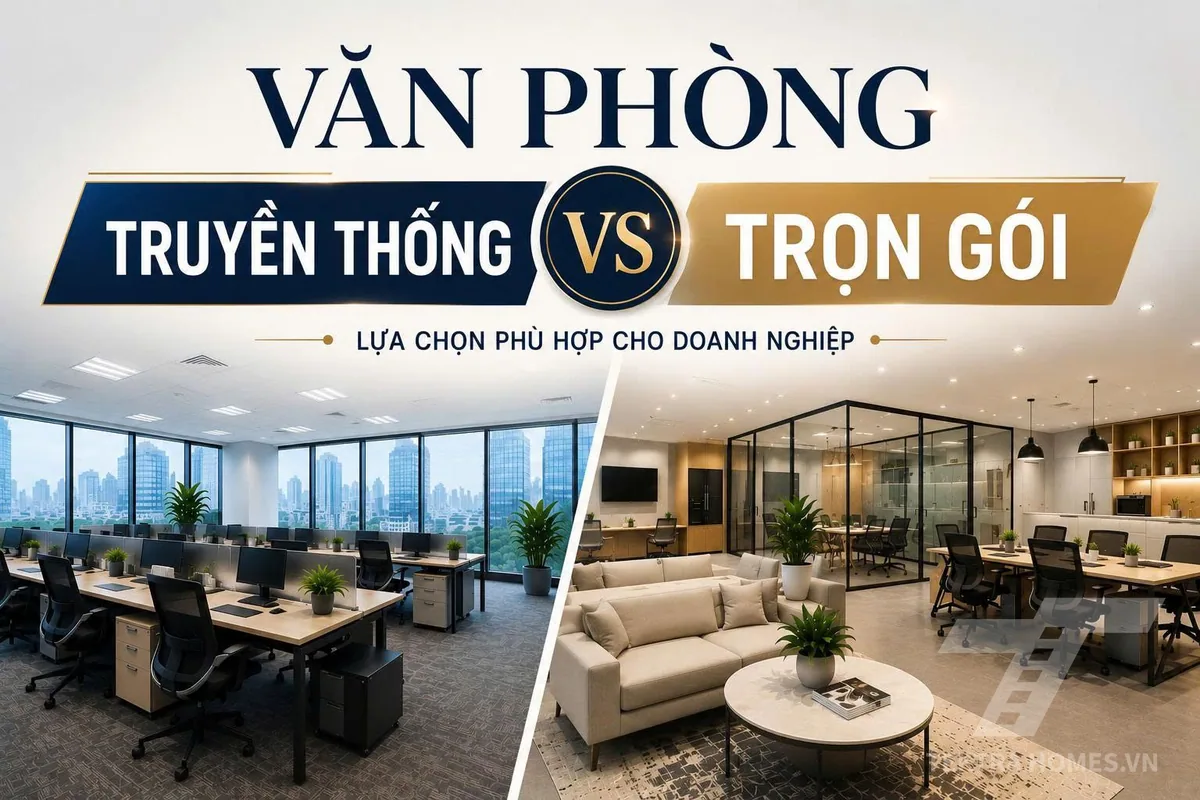
Serviced offices, coworking spaces, and shared offices remain suitable options for startups, small businesses, project teams, and foreign companies newly entering the market.
The advantage of this model is that tenants can use a fitted-out workspace immediately, reduce upfront fit-out investment, and adjust the number of seats flexibly. Lease terms are generally shorter than those for traditional offices, helping businesses adapt more easily as headcount changes.
However, businesses should clearly check the right to use the address for business registration, the level of privacy, meeting-room charges, and services charged separately from the lease package.
Green Offices and Operating Technology Draw Attention
Many new office projects are focusing on energy-efficient design, natural light, improved air quality, and building management technology. In the first quarter of 2026, new supply in Hanoi included projects certified LEED Gold and LEED Silver.
Smart access control, meeting-room booking, electricity-consumption monitoring, and air-conditioning management solutions help improve operational efficiency. These amenities are receiving increasing attention from businesses selecting long-term office space.
Outlook for the Office Leasing Market in 2026
During the remaining months of 2026, the office leasing market is expected to remain highly competitive as new supply enters the market. Hanoi may experience more pronounced pressure in the western area, while Ho Chi Minh City will continue to expand options in Thu Thiem and non-central locations.
Well-located Grade A offices are likely to remain attractive to large businesses. The Grade B segment will face greater competition on price, incentives, and service quality. Older buildings may need to renovate technical systems, common areas, and tenant-care policies to avoid rising vacancy.