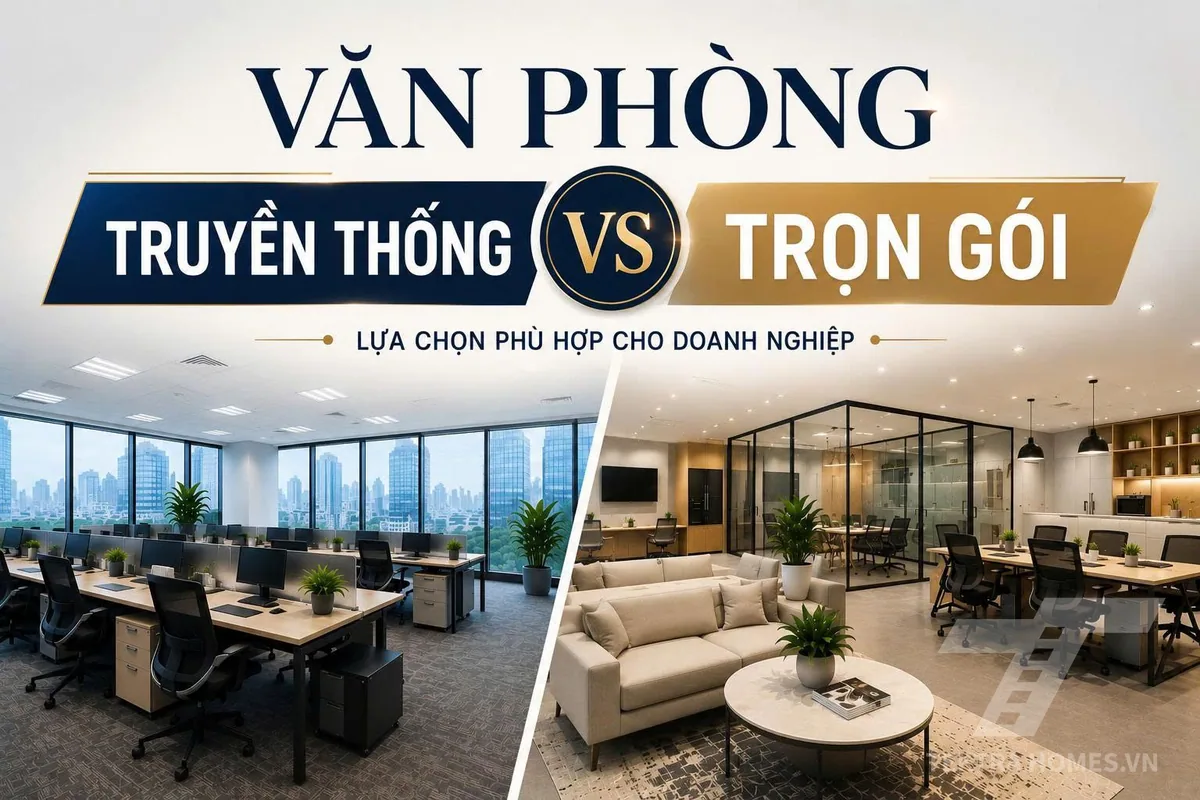
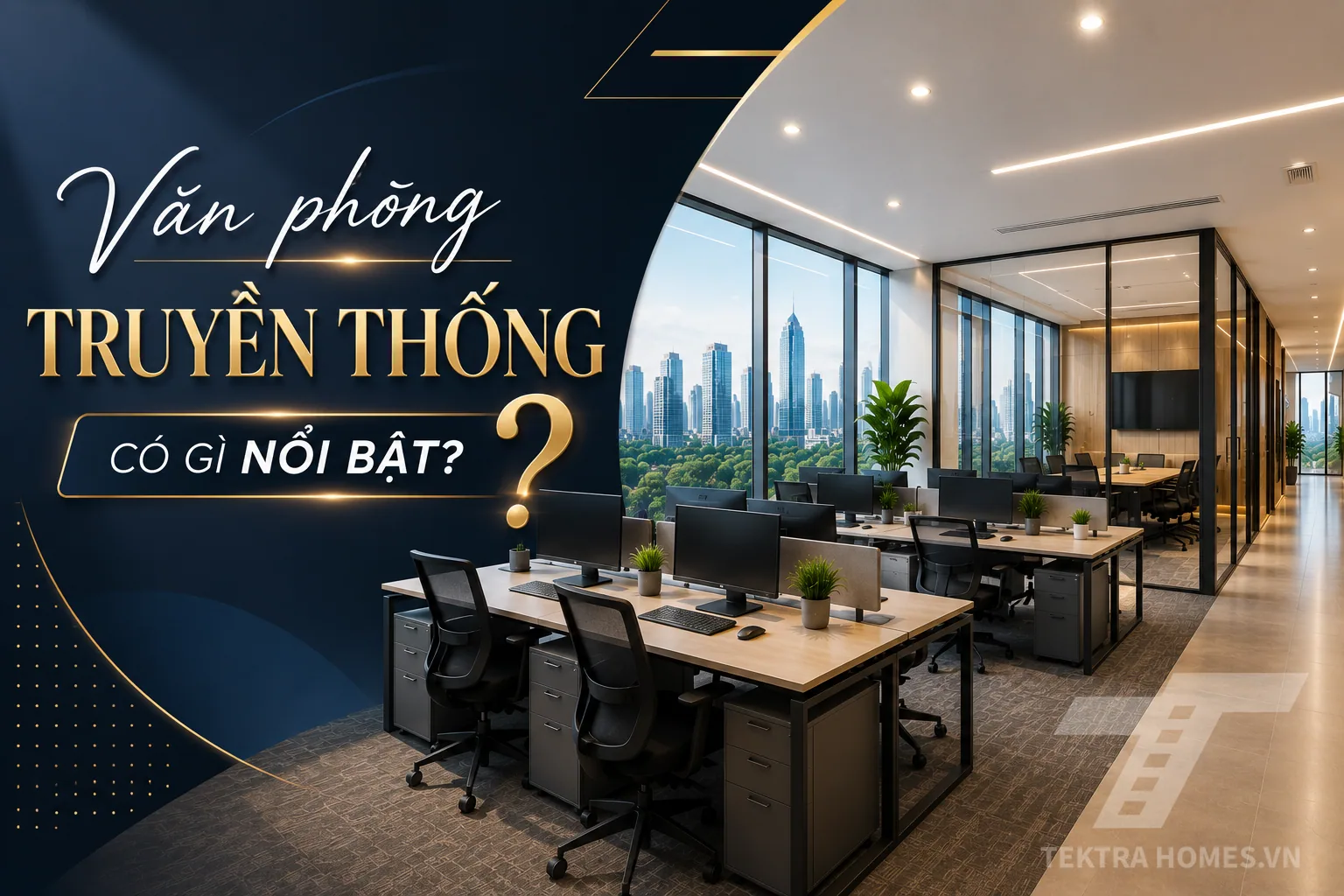
Traditional Office Concept and Detailed Analysis of Pros and Cons
Alongside the rapid growth of flexible workspace models such as coworking spaces and serviced offices, the traditional office remains a core choice for most businesses establishing a long-term headquarters. An independent, enclosed workspace not only reinforces brand positioning but also provides a solid foundation for building company culture.
However, operating a traditional office also requires significant upfront investment and responsibility for independently managing operations. The article below clarifies the nature of this model, provides a detailed analysis of its advantages and disadvantages, and offers a practical comparison table to help businesses make an optimal decision.
What Is a Traditional Office?
A traditional office is a workspace model owned by or leased long-term by a single business. Unlike a shared office, the entire leased area—from shared work areas, meeting rooms, executive offices, and reception desks to pantry areas—is managed exclusively by the business and can be freely designed to reflect its own brand identity.
Key characteristics of a traditional office include:
Complete independence and privacy: An enclosed workspace with no shared on-site facilities with other organizations.
Long-term lease agreements: Typically signed for 3 to 5 years or longer to amortize fit-out costs.
Operational autonomy: The business directly manages facilities, IT network systems, reception personnel, and work schedules.
Basic handover condition: Premises are commonly handed over in shell condition or with basic finishes (suspended ceilings, leveled concrete flooring, standard air-conditioning and fire protection systems), allowing for customized fit-out works.
Key Advantages of the Traditional Office Model
Brand Positioning and Corporate Identity Building
A traditional office offers maximum freedom in architectural design, logo placement, brand colors, and functional department layouts. A well-appointed headquarters with a consistent design from the reception lobby to work areas creates a professional impression, strengthens trust among partners and clients, and enhances credibility when recruiting high-quality talent.
Information Security and Data Protection
For businesses operating in finance, banking, software technology, healthcare, or legal services, data security is a critical priority. A traditional office can reduce data exposure risks associated with public internet connections, prevent unauthorized access to internal documents, and support strict confidentiality for strategic meetings.
Full Control and Functional Flexibility
Businesses have full control over usage hours without depending on a third party's opening and closing schedule. Managers can allocate space flexibly: expand team work areas, arrange recreational zones, create document storage areas, or set up a dedicated server room according to actual needs.
Long-Term Stability and Team Cohesion
Working in a fixed, well-equipped space that reflects a distinct company culture can help employees develop a sense of belonging and confidence in contributing. Location stability also helps businesses maintain seamless dealings with government authorities and established partner networks.
Disadvantages and Operational Challenges of Traditional Offices
Significant Upfront Capital Expenditure (CapEx)
When leasing a traditional office, businesses must cover several substantial costs from the outset:
Lease security deposit (typically equivalent to 3–6 months' rent).
Design and interior fit-out costs: drywall or glass partitions, carpeting or flooring, electrical and network cabling, lighting installation, and furniture procurement.
Costs for office machinery, equipment, and security control systems.
Contractual Commitments and Reduced Scalability Flexibility
Traditional office leases typically include commitments of at least 3 years, with significant penalties for early termination. When a business experiences rapid growth and needs to expand its workforce, or needs to downsize in response to business changes, adjusting the leased floor area immediately can be very difficult.
Management Burden and Recurring Operating Expenses (OpEx)
Businesses must manage or outsource all support services themselves, including equipment maintenance, in-office cleaning, internet connection maintenance, electricity bills, and overtime charges incurred outside standard working hours. This increases the workload pressure on administrative and HR teams.
Comparison: Traditional Offices and Serviced Offices
Comparison Criteria | Traditional Office | Serviced Office |
Contract Term | Long-term (3–5 years or more) | Highly flexible (from 1 month, 6 months, to 1 year) |
Upfront Investment Cost | High (large deposit, design and fit-out costs) | Low (typically only a 1–2 month deposit, ready to move in) |
Brand Identity | Exclusive, with full design control based on brand identity | Limited (logo placement only on a shared directory board or at reception) |
Security Level | High security, with dedicated network systems and access control doors | Moderate (shared lobby, meeting rooms, and connections) |
Operations Management | The business manages and maintains everything itself | The serviced office provider handles everything from A to Z, including reception, cleaning, and IT |
Monthly Costs | Variable costs (rent + electricity + service charges + overtime) | Fixed all-inclusive costs stated in the contract |
Scalability | Less flexible when an immediate area change is needed | Very fast (add or reduce the number of workstations) |
Businesses Suited to Traditional Offices
The traditional office model is most effective for the following types of businesses:
Businesses with stable headcount: Companies with 20–30 employees or more, a complete organizational structure, and clear medium- to long-term business plans.
Industries with high security requirements: Banks, investment funds, audit firms, law offices, research and development (R&D) businesses, and data technology companies.
Businesses that prioritize brand presence: Large corporations and multinational companies that need a distinctive, premium reception area to regularly host strategic partners and VIP clients.
Businesses requiring specialized spaces: Organizations that need recording studios, laboratories, high-capacity server rooms, or dedicated paper document storage facilities.