Choosing an office grade not only directly affects a company’s fixed monthly operating budget, but also shapes its brand image, working environment and ability to attract talent. However, the distinctions between Grade A, Grade B and Grade C buildings in today’s market often leave many managers weighing actual costs against the value received.
Below is TektraHomes’ comprehensive analysis to help businesses understand the rental structure, management fees and core technical standards across these three grades.
1. Overview comparison of rental prices and technical specifications
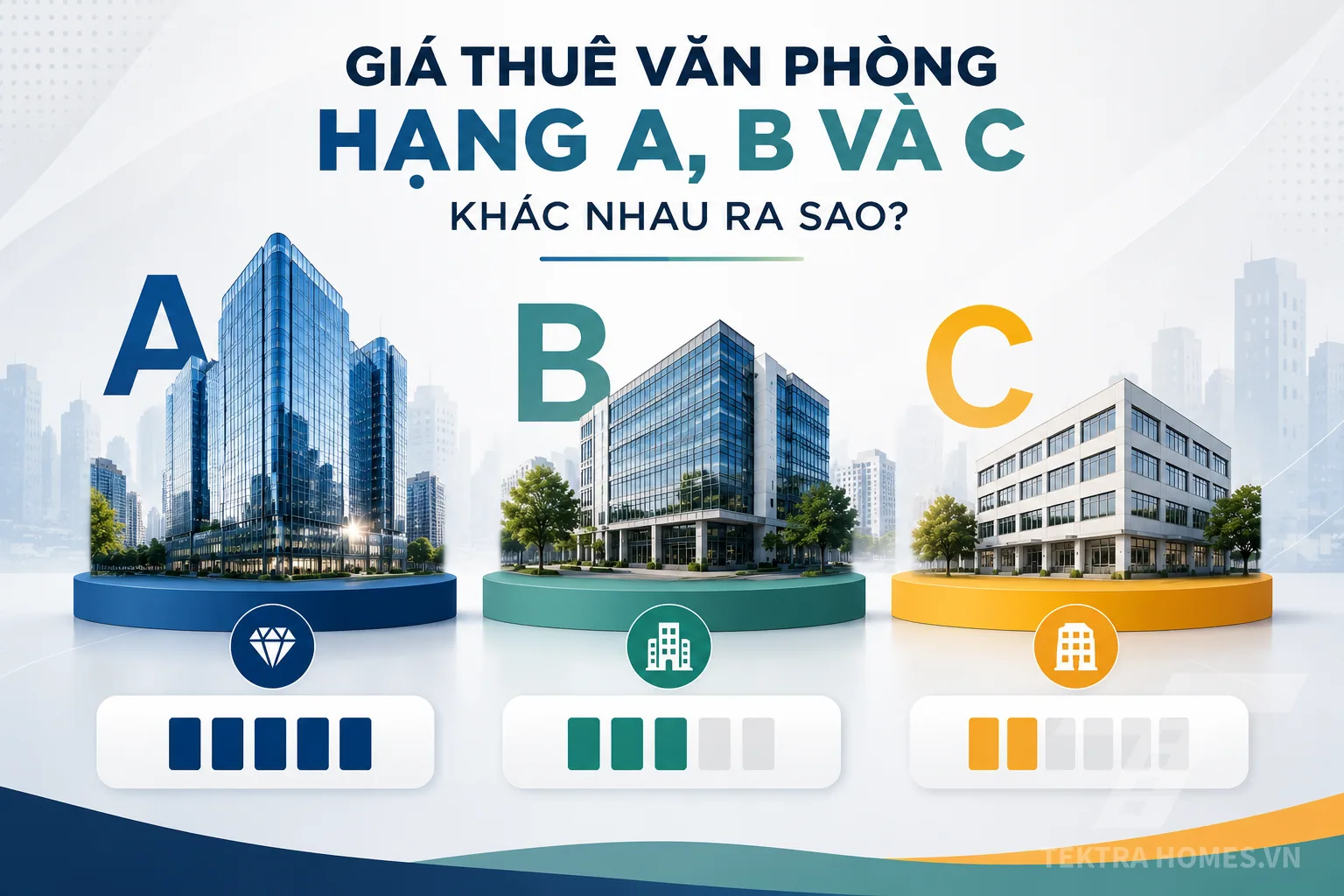
Comparison criteria | Grade A offices | Grade B offices | Grade C & privately owned offices |
Base rent | USD 28–45+/m²/month | USD 16–27/m²/month | USD 9–15/m²/month |
Management service charge | USD 5.0–8.0/m²/month | USD 3.0–5.0/m²/month | USD 1.0–2.5 (or free) |
Location | Central Hoan Kiem, Ba Dinh, Tay Ho, or the Cau Giay financial corridor | Major roads in Cau Giay, Nam Tu Liem, Dong Da and Thanh Xuan | Secondary streets, accessible wide alleys, or suburban areas |
Scale & floor area | Floor plates > 1,000m²; total area > 20,000m² | Floor plates of 500–1,000m²; total area of 10,000–20,000m² | Floor plates < 500m²; typically 7–10 storeys |
Clear ceiling height | $\ge$ 2.7m (often incorporating raised access floors) | 2.5m–2.65m | 2.4m–2.6m |
Air-conditioning system | Smart central HVAC with international-standard fresh-air filtration | Central VRV or floor-by-floor cassette air-conditioning | Wall-mounted or cassette air-conditioning units |
Elevators | High-speed (> 3m/s), destination-control system and dedicated waiting areas | 2–4 standard-speed elevators (1.75–2.5m/s) | 1–2 standard elevators |
Building standards | International green building certification (LEED, Green Mark, LOTUS) | Modern design and approved fire safety standards | Basic fire safety standards and minimalist design |
2. Detailed analysis of each office grade
Grade A offices: The highest level of prestige and international standards
Operational features: Managed by reputable international property management firms (such as Savills, CBRE and JLL). They offer luxurious reception lobbies, tiered access-card security, automatic fire safety systems meeting stringent standards, and 100% instant backup power.
Key advantage: Reinforces corporate prestige, offers highly connected business locations, energy-efficient green spaces, and maximises the workplace experience for senior talent.
Typical tenants: Multinational corporations, commercial banks, financial investment funds, leading technology companies and large FDI enterprises.
Grade B offices: The ideal balance between cost and functionality
Operational features: Representing the largest share of supply in dynamic growth areas such as Duy Tan, Me Tri and Trung Hoa Nhan Chinh. These buildings feature modern facilities, professional management teams and relatively spacious parking.
Key advantage: Rental rates are only 50%–60% of Grade A rates while still providing a professional image, major street-front locations and convenient transport access.
Typical tenants: Small and medium-sized enterprises (SMEs), software/IT companies, advertising agencies, logistics firms and financial businesses in a rapid expansion phase.
Grade C offices & privately owned office buildings: A cost-efficient solution for startups
Operational features: Small- to medium-scale buildings with equipment sufficient for basic administrative operations. Most are operated directly by private management teams or landlords.
Key advantage: Fast and straightforward lease negotiations, flexible small-unit options (from 35m²–150m²), flexible working hours, and less reliance on strict after-hours fee policies.
Typical tenants: Newly established businesses (startups), small representative offices, independent work groups and online businesses.
3. Hidden costs to review carefully before signing a lease
When comparing quotations between buildings, businesses should calculate the total actual occupancy cost (all-in cost) rather than focusing solely on the initial quoted rental rate:
Net vs. gross area measurement: Grade A offices are often measured by net area (usable area), while some Grade C buildings use gross area (including corridors, columns and shared restroom areas), which can create a 10%–20% difference in the actual budget.
After-hours air-conditioning charges (overtime): Grade A/B buildings using central air-conditioning may charge USD 15–35/hour/floor for work after 6:00 PM. If a business frequently works overtime, it should prioritise buildings with independent air-conditioning or a charging mechanism based on smaller areas.
Fit-out rent-free period policy: Grade A/B buildings typically offer 30–60 rent-free days for interior fit-out, helping businesses save a significant amount during the office relocation phase.
Motorbike and car parking fees: Clearly confirm the number of allocated fixed parking spaces and monthly parking rates to avoid a situation where employees have no parking after moving in.