The “Flight to Quality” Trend: A Wave of Relocation to Higher-Quality Offices
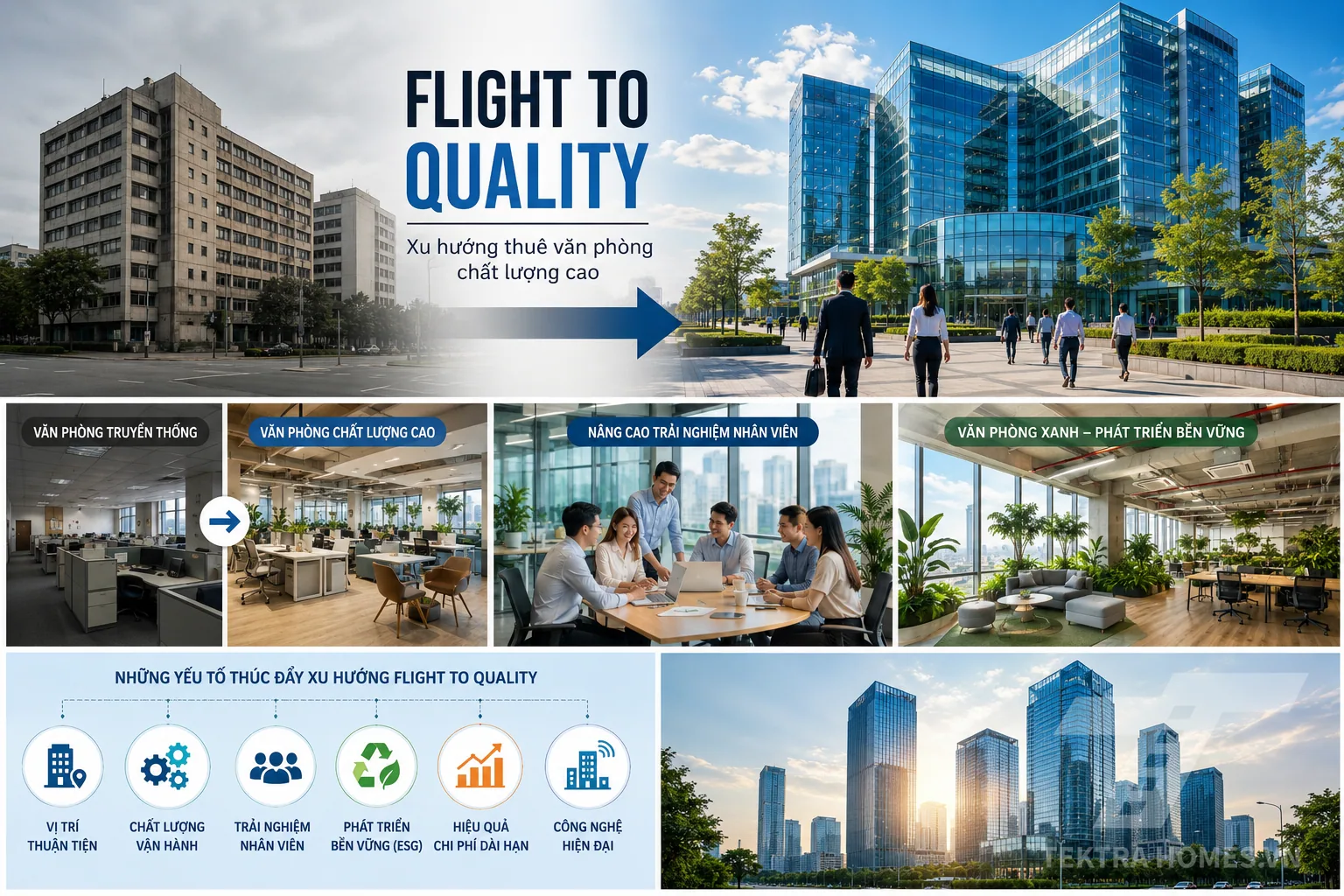
Vietnam’s commercial office real estate market is undergoing a structural shift driven by the “Flight to Quality” trend—the movement towards workspaces of superior quality. Rather than focusing solely on short-term budget reductions, a growing number of businesses—from multinational corporations and technology/Fintech companies to mid-sized and large local enterprises—are proactively leaving ageing buildings with deteriorating infrastructure for next-generation premium Grade A and Grade B office towers.
This shift reflects an entirely new management mindset: the workplace is no longer simply a fixed cost, but a strategic tool for improving productivity, protecting employee wellbeing, fulfilling sustainability (ESG) commitments, and reinforcing market positioning.
The Nature of the Flight to Quality Trend in the Office Market
In commercial real estate, “Flight to Quality” describes tenant behaviour in which companies take advantage of market changes or abundant new supply to upgrade their workplace to a higher segment.
Previously, businesses often accepted modest premises in conventional Grade B/C buildings in central locations to save costs. However, the arrival of next-generation office towers in emerging economic hubs—such as West Hanoi and West Lake West—with competitive rents, attractive incentives, and superior technical specifications has triggered a strong wave of headquarters upgrades across the market.
Key Drivers Behind the Office Relocation Wave
The shift towards premium offices is driven by four core factors:
Enhancing Brand Positioning and Attracting New-Generation Talent
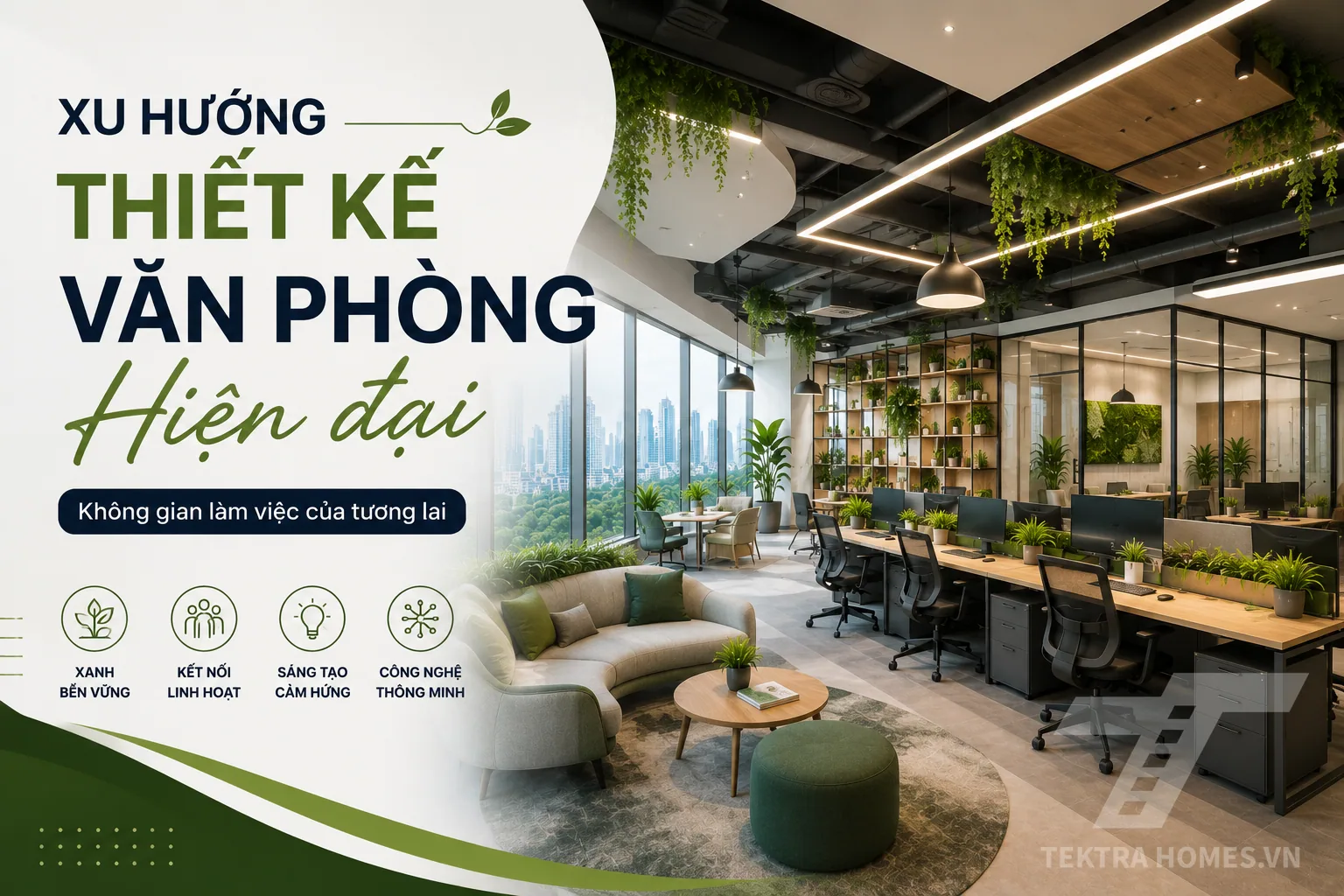
Younger generations of employees, including Gen Z and Millennials, have high expectations for their working environment. A modern office with abundant natural light, ergonomic furnishings, and integrated recreation and relaxation amenities can improve engagement, reduce staff turnover, and offer a major competitive advantage when recruiting senior talent. At the same time, an elegant headquarters in a reputable building provides a strong statement of financial capability to partners and clients.
Sustainability Commitments and ESG Green Building Standards
ESG (Environmental, Social, and Governance) standards have become a prerequisite for international businesses and listed companies. Locating headquarters in office towers with international green building certifications, such as LEED, WELL, and LOTUS, can help businesses directly reduce indirect carbon emissions, strengthen sustainability reporting, and reduce electricity consumption costs by 15% to 25%.
The Need to Restructure Flexible Workspaces
Hybrid work requires offices to feature open, multi-functional designs based on Activity-Based Working principles. Older buildings with low ceilings, dense column grids, and limited ventilation systems cannot accommodate contemporary layouts with open collaboration areas, soundproof phone booths, or multimedia online meeting rooms.
Opportunities to Access Grade A Buildings with Favourable Commercial Terms
The entry of numerous new office projects has created abundant supply and a more balanced market for tenants. Premium building owners may offer flexible negotiation terms, including extended fit-out rent-free periods, relocation cost support, or long-term rent fixing—creating a valuable opportunity for businesses to upgrade their headquarters.
Criteria for Identifying a High-Quality Office Space
Office towers that meet the standards of the “Flight to Quality” trend typically offer superior technical specifications and services:
International green building certifications: Recognised certifications such as LEED (Gold/Platinum), WELL Certified, or BCA Green Mark, alongside Low-E insulated glazing that reduces solar heat gain and optimises natural light.
Indoor air quality (IAQ): Central HVAC systems integrated with PM2.5 fine-particle filtration, continuously supplying fresh air treated for temperature and humidity to maintain stable oxygen levels throughout the working day.
Modern floor and ceiling infrastructure: Clear ceiling heights of $2.7\text{m} - 3.0\text{m}$, along with high-load raised floors that allow electrical wiring and telecommunications cables to be safely and neatly concealed.
Smart security and operations systems (Proptech): Contactless access gates with facial recognition (FaceID), smart destination control elevators, and automated BMS building management systems.
Multi-layered amenity ecosystem: Smart basement parking with EV charging stations, on-site gyms/yoga rooms, hotel-standard pantry/cafeteria areas, and elegant reception lobbies with professional front-desk staff.
Comparison: Older Offices vs. Next-Generation High-Quality Office Towers
Comparison criteria | Traditional older office building | Next-generation high-quality office tower |
Environmental certification | No green building certification | Meets international green standards (LEED Gold/Platinum, WELL) |
Air quality | Local/central air conditioning without fresh-air supply | PM2.5 filtration and continuous fresh-air supply to healthcare-grade standards |
Clear ceiling height | Low ($2.4\text{m} - 2.55\text{m}$), with exposed beams | Spacious ($\ge 2.7\text{m} - 3.0\text{m}$), with integrated raised flooring |
Energy efficiency | High electricity consumption and heat-absorbing glazing | Heat-reducing Low-E glazing, saving 20%–30% on electricity bills |
Technology infrastructure | Manual management and conventional button-operated lifts | Smart BMS building management and FaceID facial recognition |
Employee experience | Constrained space with limited supporting amenities | Wellness-focused, with comprehensive sports and relaxation amenities |
Negotiation and Cost-Optimisation Strategies for Office Relocation
To successfully upgrade headquarters without placing pressure on short-term cash flow, businesses should consider the following strategies:
Optimise actual leased area: Rather than leasing a large space with densely arranged fixed workstations, businesses can adopt a flexible hot-desking model. Reducing required total leased area by 15%–20% may help offset the higher rental rates of Grade A buildings.
Maximise rent-free fit-out periods: Negotiate an extension of the fit-out period from 45 days to 60–90 days for large floor plates, allowing the full completion of green interior design and technical infrastructure installation without incurring overlapping rental costs.
Break down the total cost equation (All-in Cost): Calculate electricity savings from Low-E glazing, preferential parking rates, and included professional management services in detail to assess the actual overall value received.