
A to Z Office Rental Guide for Newly Established Businesses
Establishing an operating headquarters is one of the most important milestones for newly established businesses and startup teams. An office in a convenient location with a professional environment not only builds strong trust with partners and clients, but can also inspire the initial team.
However, with limited financial resources and little experience in reviewing commercial real estate legal matters, new businesses can easily fall into “hidden cost” traps or choose an unsuitable office size, resulting in cash-flow waste during their early years of operation. This article compiles practical guidance to help founders search for and lease an office safely, efficiently, and within budget.
Common Mistakes New Businesses Make When Looking for Office Space
Most managers searching for premises for the first time commonly encounter the following issues:
Renting more space than actually needed: Expecting headcount to grow too quickly can lead to leasing a large space from the outset, leaving the business with excessive fixed monthly rent and service charges.
Looking only at the base asking rent: Overlooking mandatory associated costs such as 10% VAT, building management service fees, actual electricity consumption charged at commercial rates, motorbike/car parking fees, and after-hours air-conditioning charges (Overtime).
Overlooking headquarters legal requirements: Leasing private houses, apartments without commercial-use functions, or buildings that have not passed fire prevention and fighting (PCCC) safety acceptance, which can prevent business registration or result in suspension of operations.
Inflexible lease terms: Signing long-term leases of 3–5 years with substantial deposit forfeiture penalties, putting the business in a difficult position if it needs to downsize or relocate.
Determining the Right Office Size and Rental Budget
To avoid wasting space or creating a cramped environment, businesses should calculate their required area based on practical benchmarks:
Space Standards per Employee
Standard allocation: An average of 4–6 m²/person (including individual workstations, internal circulation, and a basic reception area).
Lean allocation (Agile/Co-working): 3–4 m²/person for sales teams that are frequently out in the field or companies using a hybrid work model.
Formula for Estimating the Total Monthly Budget (All-in Budget)
New businesses should prepare financial projections using a comprehensive formula:
$$\text{Total monthly budget} = (\text{Rental rate} + \text{Service fee}) \times \text{Net area} \times 1.1 (\text{VAT}) + \text{Electricity consumption} + \text{Parking fees} + \text{Additional costs}$$
In general, the ideal office budget for a newly established business should account for only 8%–12% of total monthly operating costs to maintain a safe cash-flow reserve.
Choosing the Right Office Model for Each Growth Stage
New businesses should consider the advantages and disadvantages of three common workspace models:
Virtual Office Model
Features: The business uses a professional building address for business registration, nameplate display, and receiving mail and parcels, while renting meeting rooms by the hour when needed for client meetings.
Suitable for: Newly established businesses in the market research phase, fully remote teams, or online consulting service companies.
Cost level: Highly economical, from VND 500,000–2,000,000/month.
Serviced Office / Co-working Space Model
Features: A workspace fully equipped with desks, chairs, printers, shared reception, a beverage pantry, high-speed internet, and meeting rooms. Businesses can simply bring in their laptops and start working without investing in interior fit-out.
Suitable for: Businesses with 3–15 employees that need flexible lease terms (from 3 months and 6 months to 1 year) and want to control fixed monthly costs.
Cost level: From VND 2,000,000–4,500,000/seat/month.
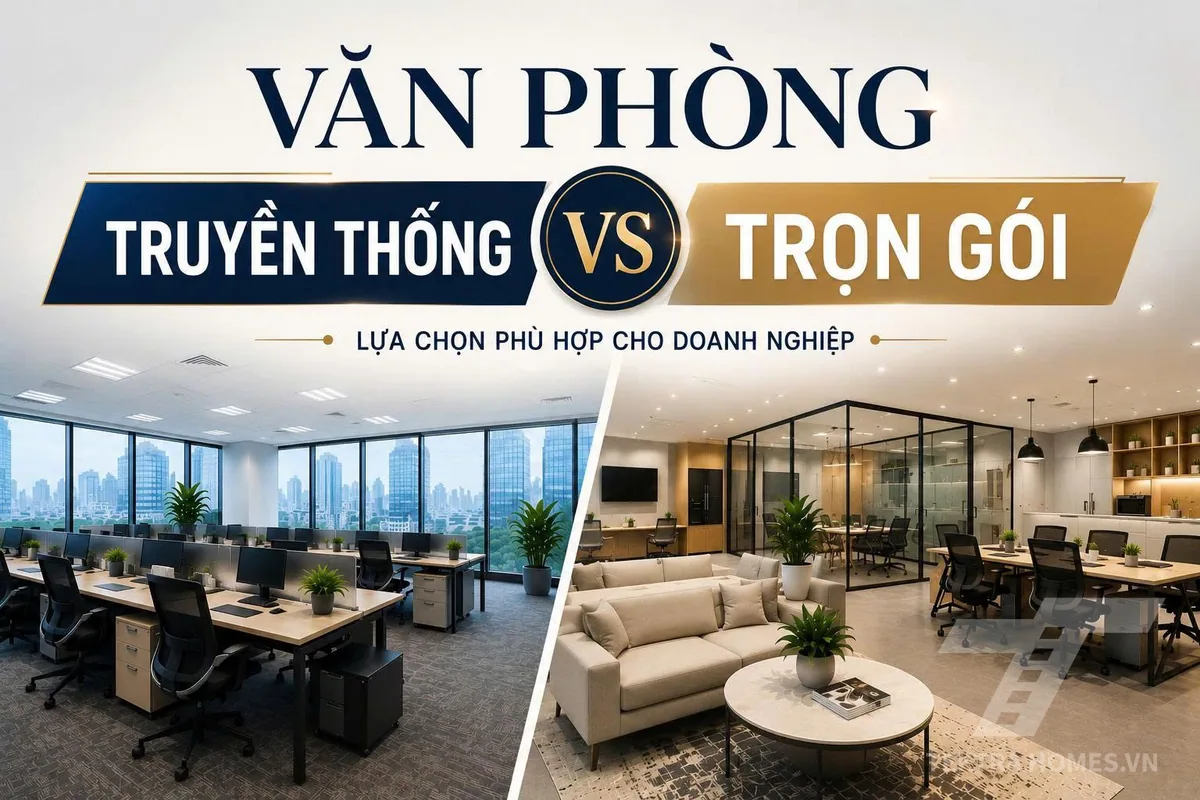
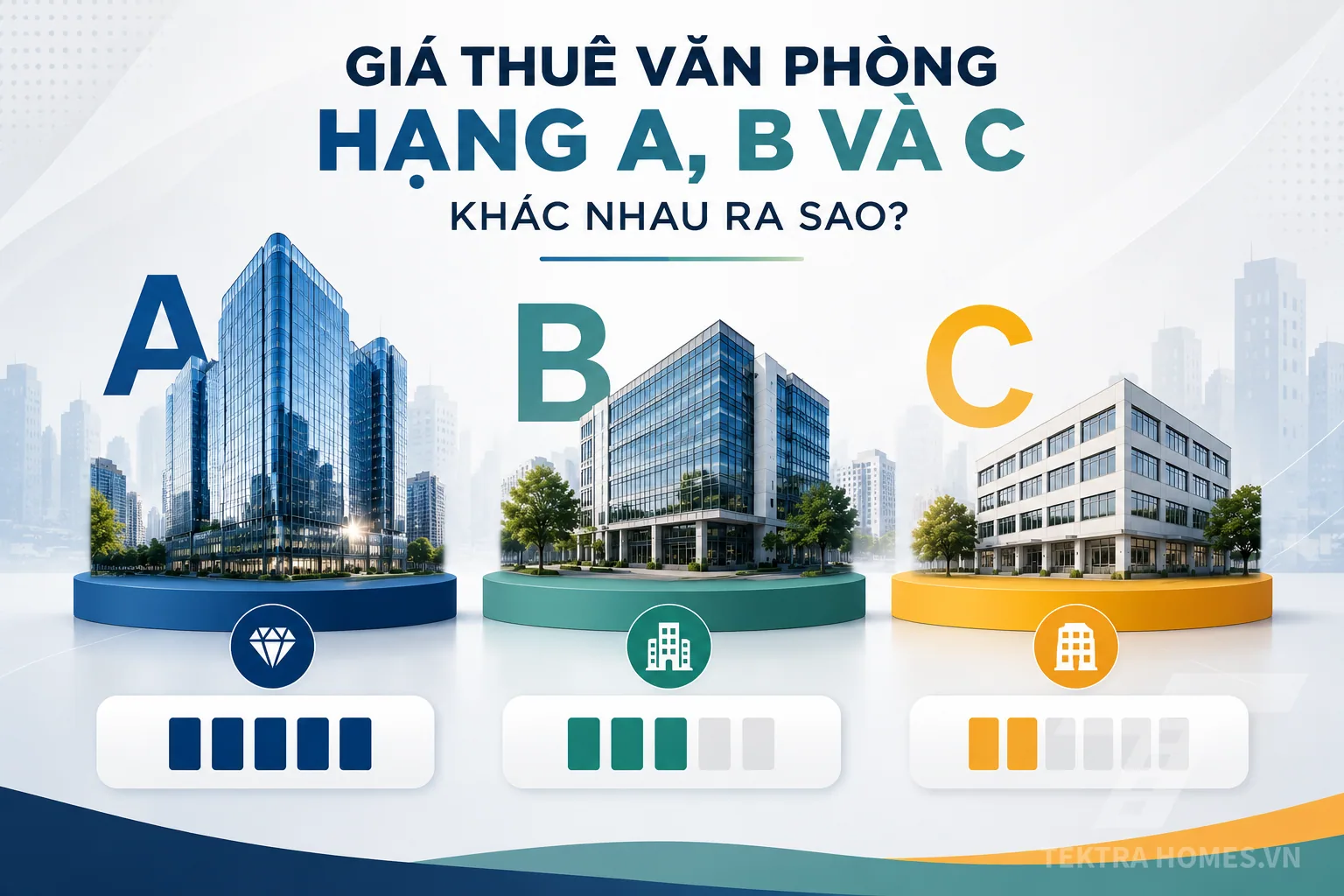
Traditional Grade B, Grade C, or Shophouse Office Model
Features: Leasing an independent floor area (from 50 m²–150 m²), with the freedom to design brand identity, arrange departments, and have full control over the space.
Suitable for: Businesses with 15–30 employees or more, pursuing stable long-term development (2–3 years or more), and having initial capital expenditure (CapEx) for interior design and fit-out.
Cost level: From USD 9–18/m²/month (excluding VAT and management fees).
Office Model Comparison for New Businesses
Comparison criteria | Virtual office | Serviced office | Traditional Grade C/B office |
Initial investment cost | Almost zero | Very low (1–2 months’ deposit) | High (3 months’ deposit + fit-out costs) |
Lease flexibility | Very high (6 months–1 year) | Flexible (1–12 months) | Fixed (minimum 2–3 years) |
Brand identity | Logo on a shared nameplate | Shared nameplate + reception | Full freedom to create a dedicated brand identity |
Data security level | Not applicable | Moderate (shared amenities) | Complete (enclosed space with dedicated access-card door) |
Operational management burden | None | None (managed as an all-inclusive service) | Manage equipment, IT, and cleaning independently |
Managing Additional Costs and Key Lease Terms
Before signing a commercial lease, business owners should negotiate and clarify five key terms:
Rent-free fit-out period: Negotiate 15–30 days for smaller spaces or 45 days for medium-sized spaces without base rent, allowing the office to be completed before rental charges officially begin.
Deposit policy and payment method: The standard market practice is a deposit equal to 3 months’ rent and payment every 3 months. For startups, negotiate monthly or bi-monthly payments to reduce cash-flow pressure.
After-hours work charges (Overtime): If the business regularly operates evening shifts or weekends, prioritize buildings with independent split air-conditioning systems or agree on an after-hours rate per m² rather than a charge for the entire floor cluster.
Make-good clause: Clearly specify which assets and furnishings may remain upon lease termination to avoid costly dismantling and reinstatement expenses.
Periodic escalation rate: Agree to keep rent fixed for the first 2 years, with increases in subsequent years capped at 5%–8%.
A 5-Step Process for Finding an Office Efficiently for Startups
Prepare a detailed brief: Identify current headcount, expected additional hires over the next 12 months, preferred areas with convenient transport, and the maximum budget cap.
Shortlist options: Gather information from 3–5 suitable buildings and request an all-in cost breakdown for a clear comparison.
Conduct site tours: Check ceiling height, natural lighting, elevator conditions, basement parking capacity, and nearby food and dining amenities.
Submit an offer letter: Consolidate proposals on pricing, fit-out period, number of discounted parking passes, and payment method for negotiation with the building owner.
Review the lease and take handover: Verify the lessor’s business registration, fire prevention and fighting (PCCC) acceptance documentation, jointly inspect electricity and water meter readings, and prepare a detailed premises handover record.