The A-to-Z Office Leasing Process for Businesses
Leasing an office may seem simple, but in reality it is one of the most important decisions that directly affects a company’s operating costs, brand image, and long-term growth. Just one mistake during the selection or contract-signing process can result in hundreds of millions of VND in unnecessary costs.
So, what steps are involved in the A-to-Z office leasing process for businesses? The article below will help you understand the entire process, find a suitable office, optimize your budget, and minimize risks.
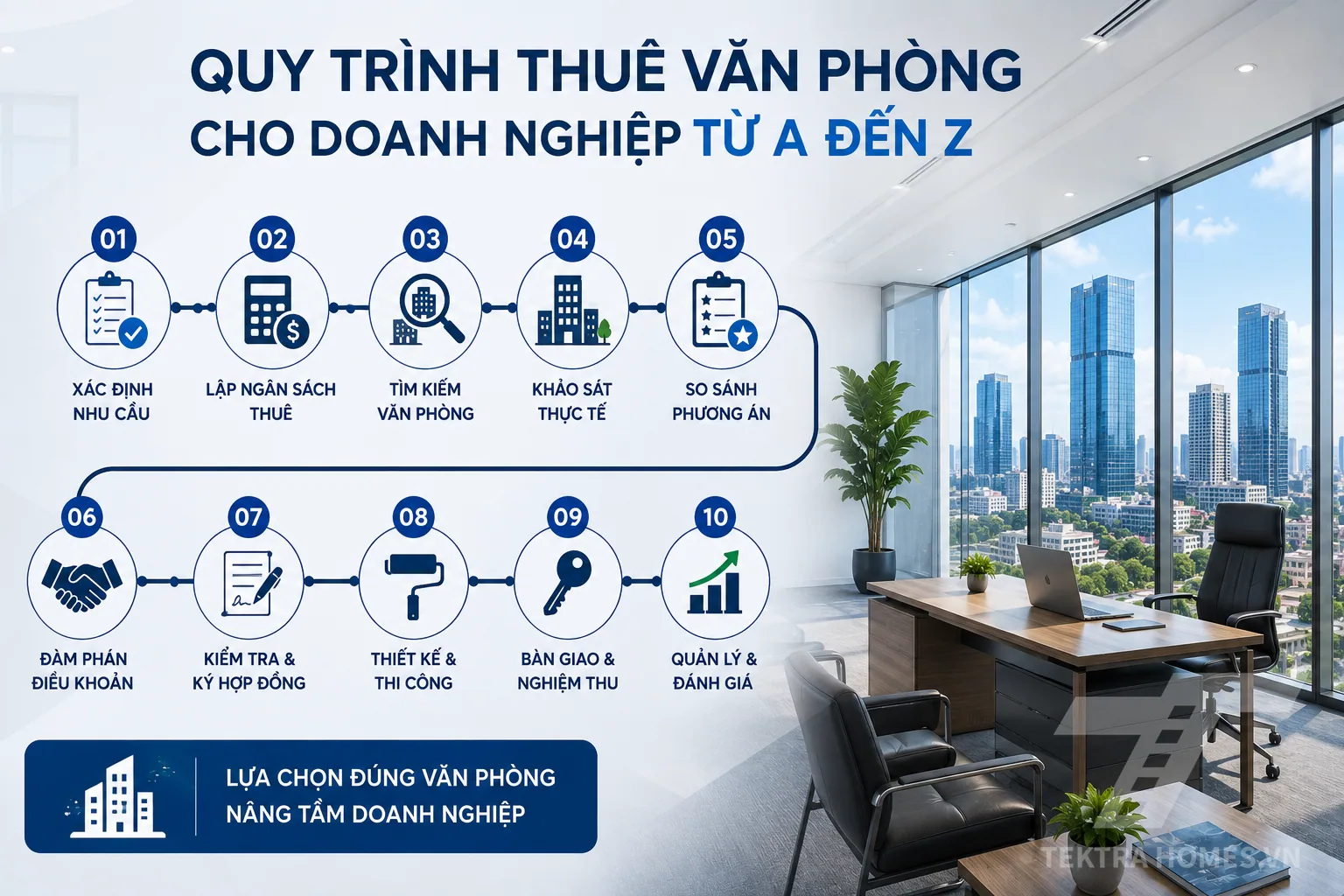
Step 1: Define your office leasing needs
This is the most important step before starting your property search.
Businesses need to answer the following questions:
How many employees will the office accommodate?
Is expansion expected within the next 2–5 years?
What is the maximum leasing budget?
Which area do you want to lease in?
Do you prioritize a traditional office or a flexible office?
=> Clearly defining your needs will shorten the search time and help prevent unsuitable choices.
Step 2: Set a leasing budget
Many businesses focus only on the rental rate per m², while the actual total cost also includes:
Monthly rent.
Management fees.
Security deposit.
Electricity, water, and internet costs.
Parking fees.
Interior design and fit-out costs.
Operating costs after moving in.
In general, businesses should allocate around 10–15% of revenue to office costs to maintain financial balance.
Step 3: Search for a suitable office
Today, businesses have many ways to find office space:
Search property websites.
Contact the developer directly.
Work with an office leasing consultant.
Seek referrals from partners.
A professional consultant can help businesses access more options, save time, and negotiate more effectively.
Step 4: Conduct an on-site inspection
Do not make a decision based only on images or advertising information.
During the inspection, assess:
✅ Building location.
✅ Air-conditioning system quality.
✅ Elevators.
✅ Parking availability.
✅ Fire prevention and firefighting system.
✅ Backup generator.
✅ Reception area.
✅ Restrooms.
✅ Workspace.
You should also inspect the location at different times of day to assess traffic conditions and accessibility.
Step 5: Compare multiple options
Do not choose the first office you see.
Compare options based on: rent, management fees, area, location, lease term, amenities, and parking.
Comparison helps businesses make objective decisions that suit their needs.
Step 6: Negotiate lease terms
This step can help businesses achieve significant cost savings.
Key items to negotiate include:
Rental rate.
Rent-free fit-out period.
Security deposit.
Rent escalation schedule.
Contract termination conditions.
Repair costs.
Renewal terms.
The right to expand the leased area in the future.
Do not focus only on the rental rate, as these terms also have a major impact on the total cost.
Step 7: Review the lease agreement
Before signing, businesses should carefully review the entire agreement.
Pay particular attention to:
The building’s legal information.
The actual leased area.
Rent and all fees.
Contract term.
Payment terms.
Compensation clauses.
Contract termination conditions.
Security deposit refund terms.
If necessary, ask a lawyer or consultant to review the agreement to help protect your interests.
Step 8: Design and fit out the interior
After signing the agreement, the business will proceed with:
Space planning.
Interior fit-out.
Installation of electrical and network systems.
Workspace arrangement.
Safety standards inspection.
Choose a design that optimizes functionality, suits the company culture, and can be easily expanded in the future.
Step 9: Handover and acceptance inspection
Before putting the office into use, check:
Electrical system.
Air conditioning.
Internet.
Water system.
Fire prevention and firefighting equipment.
Furniture.
Security system.
Prepare an acceptance record to avoid disputes later.
Step 10: Manage and evaluate usage efficiency
After moving into the new office, businesses should monitor:
Operating costs.
Employee satisfaction.
Space utilization efficiency.
Building service quality.
Additional costs.
Regular evaluations will help businesses optimize their space and prepare effectively for expansion plans.

5 common mistakes businesses make when leasing an office
❌ Focusing only on rent while overlooking operating costs.
❌ Leasing an area that is too large or too small.
❌ Not reading the agreement carefully.
❌ Not conducting an on-site inspection.
❌ Not planning for future expansion.
Tips to help businesses lease an office more cost-effectively
Inspect multiple buildings before making a decision.
Carefully negotiate the contract terms.
Choose a time when the market has abundant supply.
Work with a reputable consultant to access more options.
Calculate the total cost of occupancy rather than looking only at the rental rate.